Choose a meaningful goal
That might be getting stronger, returning to a routine or feeling more confident with exercise. We begin with your experience and preferences.
Use cases
Your goals and training history should lead the conversation—not assumptions about what women need.
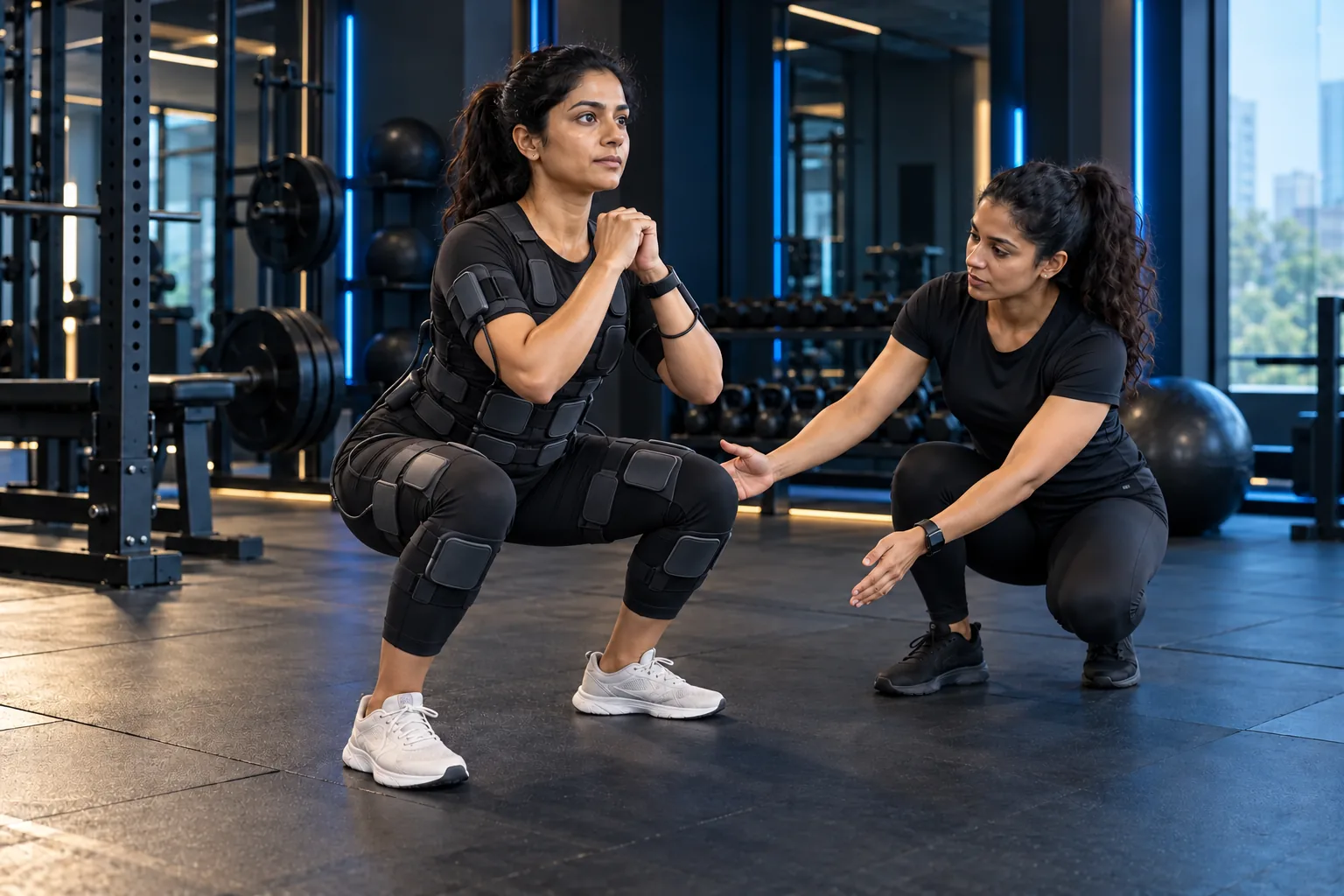
Have a training goal in mind?
Request a guided sessionStart here. EMS means electrical muscle stimulation: pads in a suit deliver controlled pulses while you move with a trainer. Suitability and the wider training plan still matter.
That might be getting stronger, returning to a routine or feeling more confident with exercise. We begin with your experience and preferences.
Guided EMS combines electrical stimulation with movement. Suit fit, movement selection and session intensity should be discussed individually.
Pregnancy, recent surgery and changes in health can affect suitability. Whole-body EMS should not be assumed appropriate during pregnancy or after childbirth; seek qualified advice.
An EMS training session is not a treatment for hormonal conditions, pelvic-floor dysfunction or other women’s health concerns. Those require appropriate clinical assessment.
Your goal leads
New to training or returning after a break?
Strength, confidence or a consistent routine?
Relevant health history and advice matter.
Do not assume EMS is suitable. Discuss your circumstances with an appropriate clinician. An EMS session is not a treatment for pelvic-floor or hormonal conditions.