KSLKinetic
Science Lab

EMS science

Electrical stimulation. Purposeful movement.

EMS stands for electrical muscle stimulation. Here is what that means in a training session.

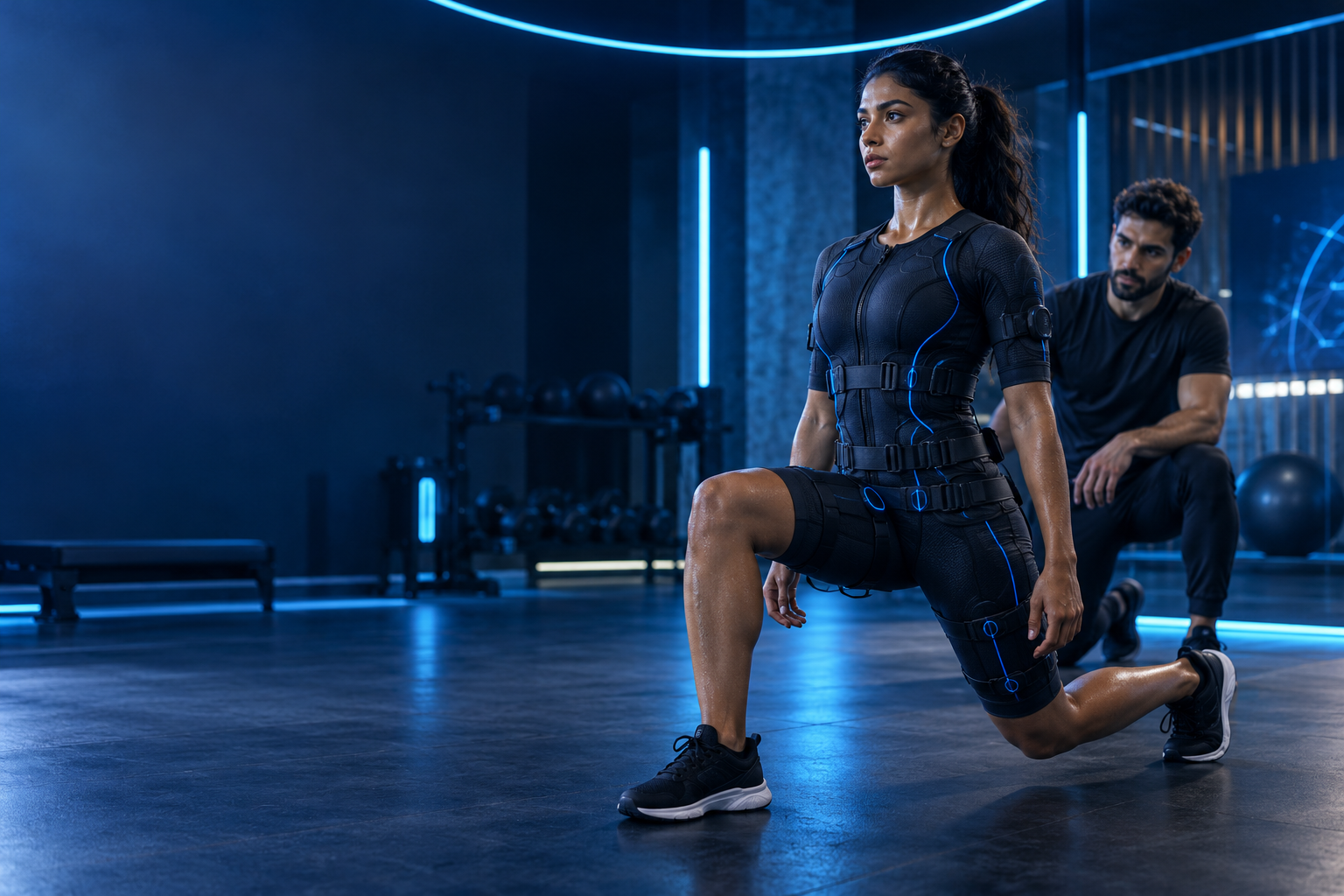
A person performing a guided lunge in an EMS suit
Guided EMS / illustrative

Questions about EMS or suitability?

Request a guided session

Start here. Normally your brain signals a muscle through nerves. EMS uses electrodes on the skin to activate nearby motor nerves while you deliberately exercise.

01

A signal reaches the muscle

Normally, your brain sends a message through nerves to move a muscle. EMS does not wait for that message from the brain. Electrodes on the skin send a controlled electrical pulse that activates nearby motor nerves and makes the muscle contract. You still choose and perform the movement.

02

The suit puts the signal in the right places

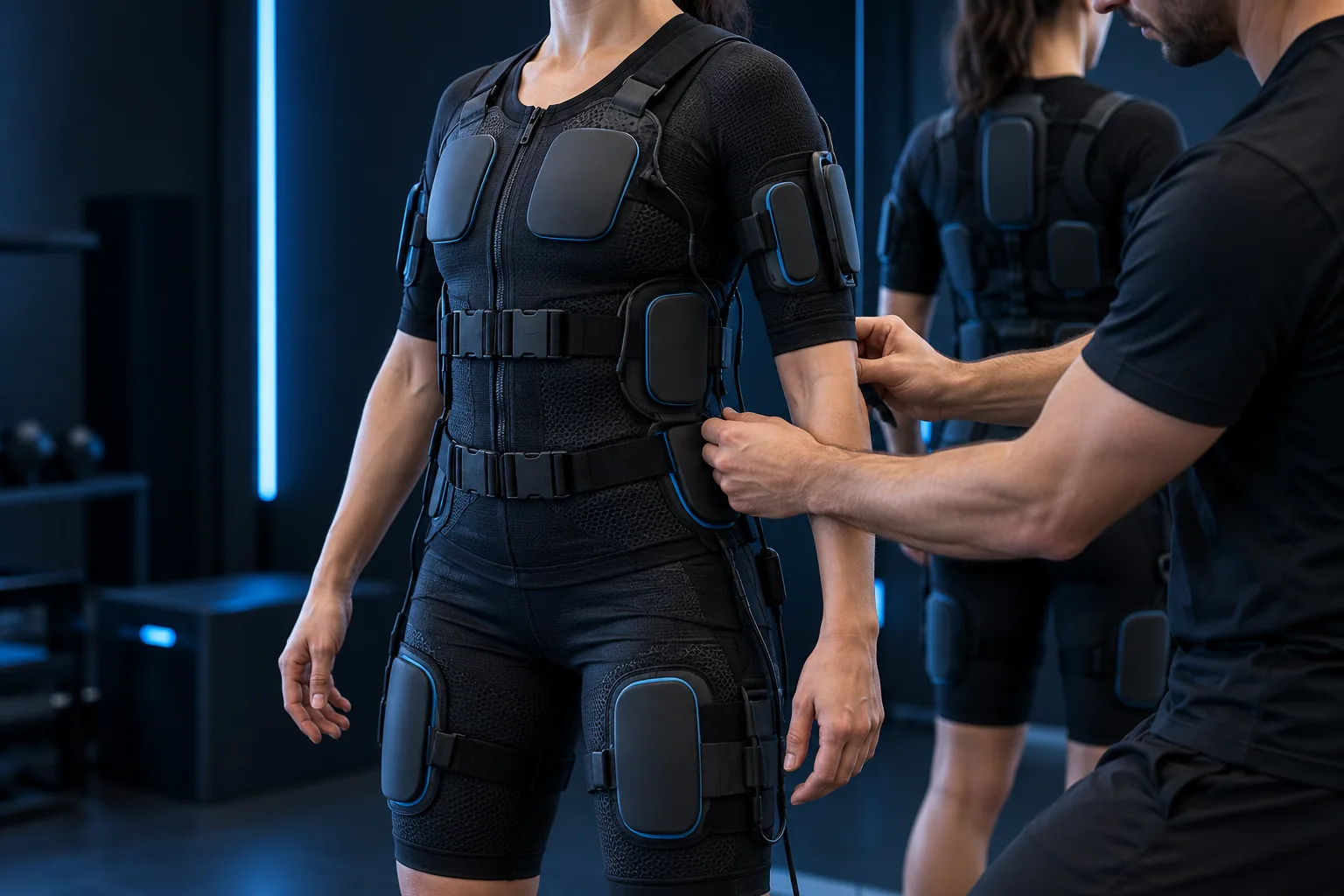
Electrode pads sit against the body at the chest, back, arms, sides and thighs. The suit holds them in place; the control system delivers timed pulses. Fit and contact matter.

A closer look

Follow the signal through a session

The electrical impulse is only one part of guided whole-body EMS. Fit, movement and feedback give it context.

Illustrative visual for How EMS works
Illustrative visual

01 / Contact

Electrodes in the suit meet the skin over selected muscle groups. The trainer checks fit and contact before increasing stimulation.

02 / Impulse

A controller delivers timed electrical impulses. Sensation varies by person and body region; settings are discussed, not guessed.

03 / Movement

You perform coached movements during the intervals. The trainer watches technique and asks how the effort feels.

04 / Review

Your response during and after the session informs recovery advice and whether another exposure makes sense.

A useful question

What should a first-time visitor notice?

The sensation should be understandable and communicable. You should be able to tell the trainer where it feels too strong, uncomfortable or uneven at any point.

03

You still move

In guided training, you perform selected movements during stimulation intervals. The trainer oversees technique, comfort and the session settings.

04

The response is individual

Sensation and tolerance vary. Sessions require screening, appropriate equipment, trained supervision and enough recovery between exposures.
When you move normally
BrainNervesMuscle

Your brain sends a message through nerves to activate a muscle.

With an EMS suit
ControllerElectrodesMuscle

The suit supplies a timed pulse at the skin. It bypasses the usual message from the brain by activating nearby motor nerves. You still choose the movement.