Share relevant health information
Implanted electronic devices, pregnancy, acute illness and other health conditions can affect suitability. This is not an exhaustive screening list; discuss your circumstances with qualified professionals.
EMS science
Whole-body EMS is an exercise stimulus that needs appropriate preparation, supervision and recovery.
Questions about EMS or suitability?
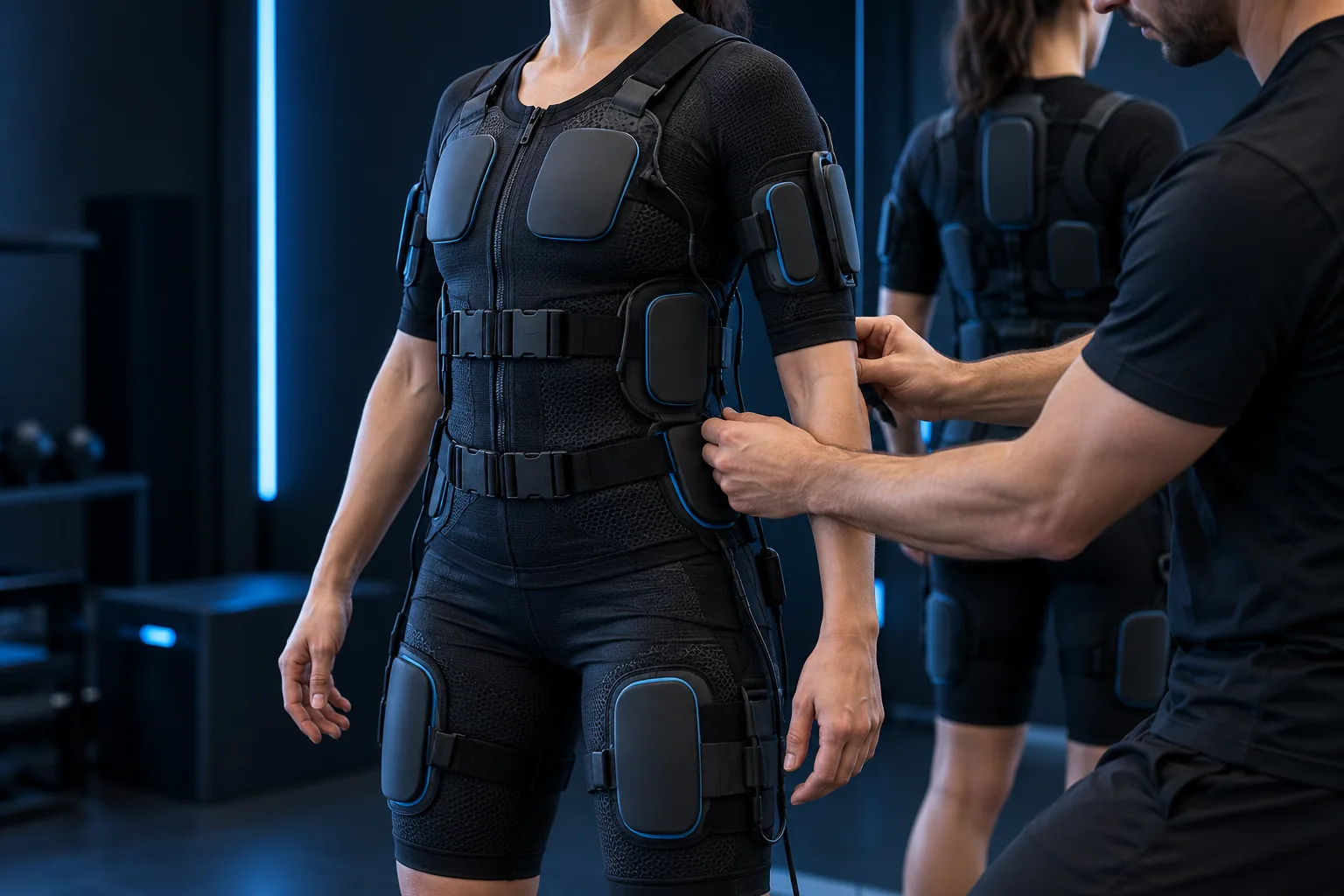
Request a guided sessionStart here. Normally your brain signals a muscle through nerves. EMS uses electrodes on the skin to activate nearby motor nerves while you deliberately exercise.
Implanted electronic devices, pregnancy, acute illness and other health conditions can affect suitability. This is not an exhaustive screening list; discuss your circumstances with qualified professionals.
First sessions should prioritise familiarisation. Excessively intense EMS, especially in unfamiliar users, can cause serious muscle injury. Intensity should not be a competition.
A safe introduction is a sequence of decisions, not a single consent form.
Share relevant health history and ask whether clinical advice is needed. Do not hide symptoms to get through a session.
The trainer explains the equipment and begins conservatively so you can learn the sensation.
Report discomfort, dizziness or unexpected pain immediately. Settings and movement can be adjusted or stopped.
Discuss what to expect and what warning signs require medical attention before planning another session.
Severe muscle pain, pronounced swelling, marked weakness or dark urine after a session needs prompt medical assessment. This list is not exhaustive.
Stop if you feel unwell or experience unexpected pain. Severe muscle pain, pronounced swelling, marked weakness or dark urine after training requires prompt medical attention.
Appropriate spacing, hydration and recovery should form part of the training discussion. Follow the trainer’s guidance and any advice from your clinician.